
Additional Camera Options Insights
Why are action cameras less suitable for law enforcement use?
Cameras like GoPro HERO11/12, DJI Osmo Action 3/4, and Insta360 X3/X4 are excellent devices, but for enforcement they are often not the first value picks because:
they cost more
battery life is often shorter than you want for continuous commuting evidence
they are less “dashcam-like”
they often rely on you actively managing recording
they are better at footage creation than evidence capture
They still make sense if you want one camera for both evidence and general filming, but not if your main goal is documenting incidents for police or court.
Is reliability more important than headline specs?
For evidentiary use the hierarchy is usually:
Reliable continuous recording
Incident protection (G-sensor / manual lock)
Battery life
Stable mounting
Readable plates
Resolution beyond 1080p–2.7K rarely adds much if compression is high.
Note the “dashcam vs action cam” distinction
It is worth stating explicitly:
Dashcam architecture
loop recording
automatic overwrite
incident locking
minimal user interaction
Action cameras
better image quality
shorter runtime
less automation
For enforcement purposes the dashcam behaviour is usually more important.
Purpose-built bicycle cameras
Cycliq Fly12 / Fly6
Garmin RCT715
The real structural categories in the dataset
The list naturally breaks into four practical classes:
Dashcams to bicycles
VIOFO
Blueskysea
70mai
DDpai
Action cameras
GoPro
DJI
Insta360
AKASO
Helmet / micro cameras
Cambox
Mobius
RunCam
One insight from this scoring
The scoring system reveals something interesting:
The best value evidence cameras are rarely the most expensive cameras.
They are usually:
small
dashcam-oriented
moderate resolution
long runtime
Below are two alternative systems drawn from the database that keep the focus on evidence capture rather than cinematic quality.
This configuration gives the highest probability of capturing a prosecutable incident.
front camera
rear camera
helmet camera

Best ~ $600 Total System
This system uses dashcams adapted to bicycles, which are often better value for evidence capture than action cameras.
Strength of this setup
very good evidentiary reliability
loop recording + incident protection
cheap enough that losing or damaging a camera is not catastrophic.
including mounts and SD cards the price will be $520-$600
Front Camera
VIOFO A119 Mini
Why it is excellent
one of the best video-quality dashcams
very good low-light performance
incident detection
loop recording
reliable firmware
Why it works on bikes
small & light
easily bar-mounted
strong evidence capture.
Price ≈ $180
Rear Camera
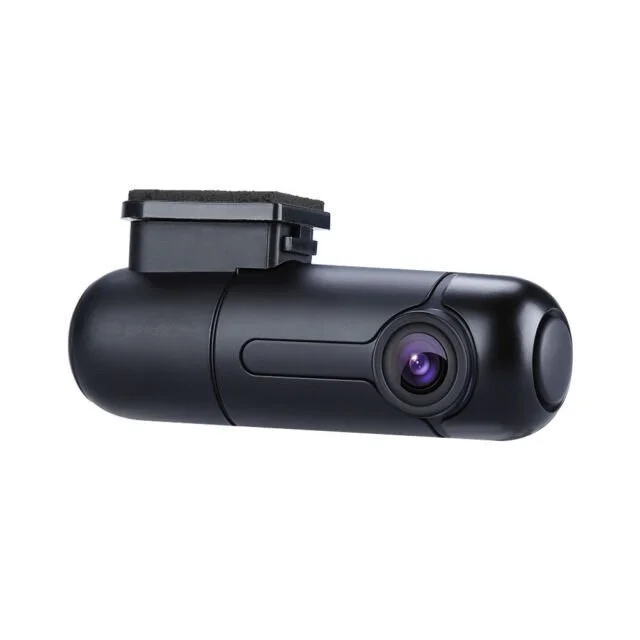
Blueskysea B1W
Why it works well
tiny cylindrical form
very light (~60 g)
loop recording
incident detection
widely used by cyclists
Price
≈ $90
Helmet Camera
Mobius Mini
Why it is good for helmet use
extremely small
light (~39 g)
simple reliable recording
inexpensive
Price
≈ $100
Cheapest system with a reasonable chance of success
If the goal is minimum cost while still capturing usable evidence, the system changes slightly.
Action cameras become viable here because very cheap ones are widely available.
Front Camera
70mai Dash Cam M300
Why it is good
extremely cheap
surprisingly good reliability
proper dashcam logic
good enough resolution for licence plates
Price
≈ $100
Rear Camera
Blueskysea B1W
Why it works well
tiny cylindrical form
very light (~60 g)
loop recording
incident detection
widely used by cyclists
Price
≈ $90
Total cost
Front ≈ $100
Rear ≈ $90
Helmet ≈ $150
Mounts / cards ≈ $100
Total ≈ $440
Helmet Camera
RunCam Thumb Pro
Why it works
extremely small (16 g)
unobtrusive
very cheap
useful for capturing rider POV
Price
≈ $150
Final practical insights
For someone serious about documenting dangerous driving:
Best system
Cycliq Fly12 Sport
Cycliq Fly6 Gen3
Cambox V4 Pro
Best moderate budget (~$600)
VIOFO A119 Mini
Blueskysea B1W
Mobius Mini
Cheapest viable system (~$400–450)
70mai M300
Blueskysea B1W
RunCam Thumb Pro
One final insight from the database
The sweet spot for enforcement cameras is surprisingly around $100–200 per camera.
Above that the gain is:
nicer video
stabilisation
cinematic features
but not necessarily better legal evidence.
A surprisingly effective very low-cost system is simply a two-camera setup:
one front camera
one rear camera
Helmet cameras are useful but not essential. In practice, most prosecutable incidents are overtakes from behind, so a good rear camera plus a front camera already captures the majority of events.
Ultra Budget Option <$300
What this setup can realistically do: This system can capture close passes, dangerous overtakes, driver aggression, collisions, license plates in daylight, and the general road context. It lacks integrated lights, radar, very long battery life, and a helmet POV, but it still provides credible incident evidence.
Front camera
70mai Dash Cam M300
Why this works well
extremely cheap
proper dashcam firmware
loop recording
incident detection
light and compact
adequate resolution (1296p)
It is far better suited to evidence recording than most cheap action cameras because it behaves like a true dashcam.
Typical price
≈ $100
Rear camera
Blueskysea B1W
Why this is one of the best ultra-budget options
extremely light (≈60 g)
cylindrical form mounts easily to bikes
loop recording
incident detection
widely used by cyclists adapting dashcams
Typical price ≈ $90
Storage and mounts
Add:
two 128-GB microSD cards
simple handlebar / seatpost mounts
Typical cost ≈ $60–80
Total system cost
Front camera ≈ $100
Rear camera ≈ $90
Memory + mounts ≈ $70
Total ≈ $250–270
Why this works better than cheap action cameras
Most inexpensive action cameras fail for evidence capture because they:
stop recording when the battery dies
overwrite clips poorly
lack incident detection
require manual control
Dashcams like the M300 and B1W are designed to:
record continuously
automatically protect important clips
run unattended.